Certificate Course on Household & Structural Pest Control and Pesticide Handling
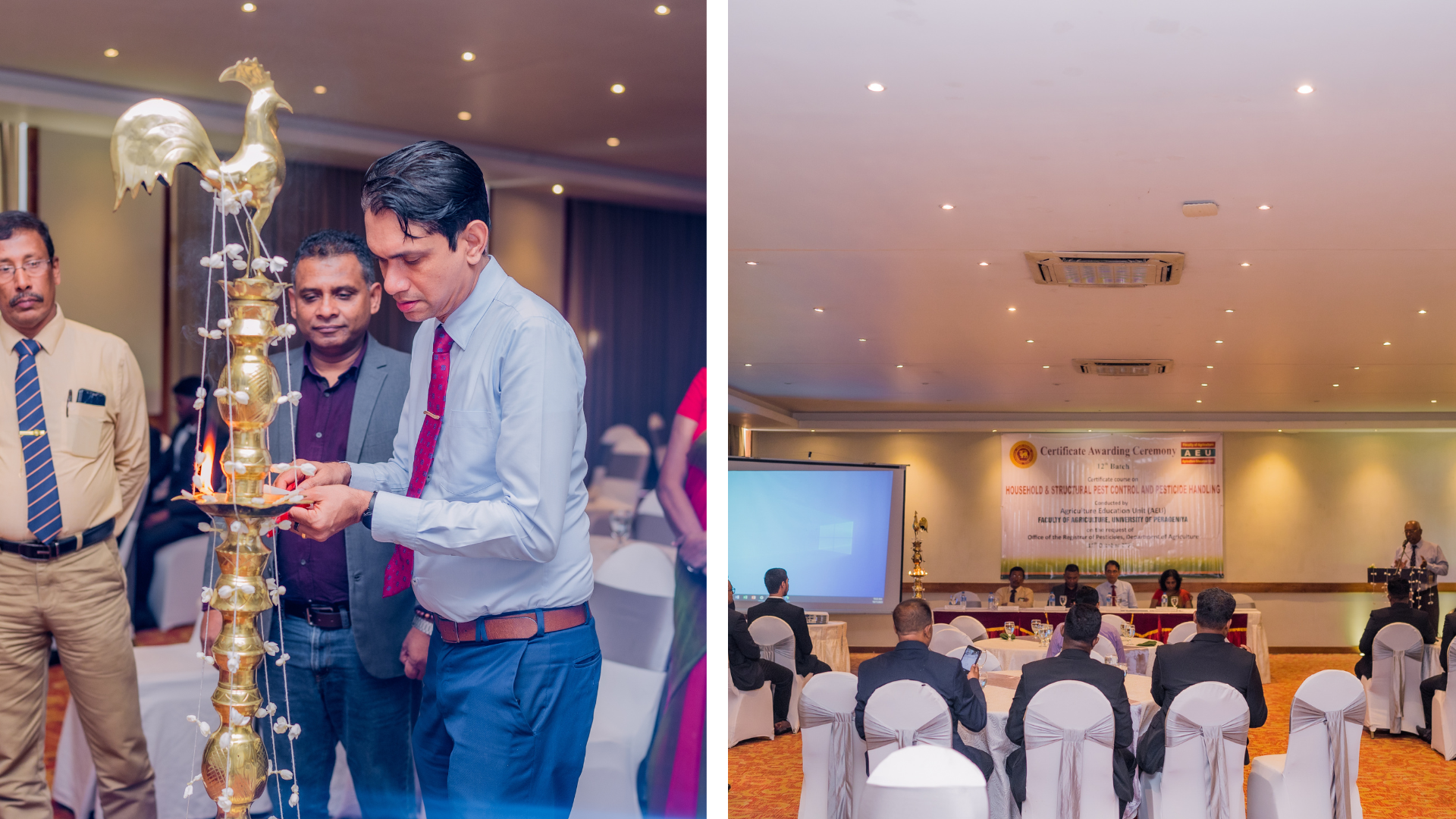
The certificate course on Household & Structural Pest Control and Pesticide Handling is offered by the Agriculture Education Unit, on request of the Registrar of Pesticides, with the objective of educating persons who are involved in general pest control and fumigation.
- Course duration: 25 days (Saturdays)
- Student engagement: 150 hours (In Class), independent learning hours (200 hours)
Expected participants:
- Persons who are involved in general pest control or expected to develop a career in the pest control industry
- Persons who are interested in gaining knowledge, experience, and competence in household pest control
Eligibility to follow the course:
- Passed the Advanced Level examinations or
- Followed the prescribed curriculum of GCE (O/L) and sat for the examination and have at least three year experince in the pest control industry. or
- Any other higher qualification (Diploma, etc.) with interest in general pest control
Programme objectives:
The programme participants will be educated and trained to
- to provide the best quality, professional pest control service to the customers
- practice effective and safe use of pesticides with minimum nontarget impacts
- implement good practices in the pest control industry
- comprehensive understanding of biology, ecology, and population management techniques of household pests.
Programme learning outcomes:
At the end of the training programme, the participants should be able to:
- Demonstrate competency in the basics of insect biology
- Identify the household insect pest species and explain their biology and ecology in relation to management
- Explain the basics of pesticides (types of pesticides, modes of action, formulations)
- Demonstrate the competency and skill in the safe handling of pesticides
- Demonstrate competency in spraying technology and fumigation
- Explain the good practices of operational procedures of pest control services
- Explain the practices of pesticide waste handling
Programme outline
Day 1: Introduction to Insect Pest Management
- Introduction to the course
- Introduce the Course participants/resource persons
- Short introduction to Entomology
- Morphology of insects
- Pre-evaluation of the participants
Day 2: Fundamentals of Insect Pest Management
- Diversity of insects and identification of major insect groups in relation to household insects
- Insect life cycles
- Immature insects / Morphology
- Growth of insect populations
- Assessments of insect populations: Sampling techniques
Day 3 and 4: Management of household pests (cockroaches, mosquitoes, ants, flies, bedbugs, fleas etc.)
- Introduction
- Identification of household insect species
- Biology and ecology of key household insect pests
- Causes for the occurrence of pest problems
- Management of household pest populations
Day 5: Management of rodents
- Introduction
- Biology and ecology of rodents
- Management of rodent populations
Day 6: Management of vertebrate pests
- Pest situations of non-conventional pests
- Basics of behaviour in relation to management: Birds/monkeys/wild boar/porcupine/gecko
- Potential management strategies of non-conventional pest species
Day 7: Management of insect pests of stored products (warehouse pest management)
- Introduction
- Identification of major stored product insects
- Biology and ecology of key pests of stored products
- Causes for the occurrence of pest problems
- Management of stored product pest populations
Day 8: Management of termites
- Introduction
- Identification of termites/taxonomy/Biology and life cycles
- Key termite species in Sri Lanka
- Management of termites: pre- and post-construction
Day 9: Practical session on chemical control of termites: Field demonstration (Post-construction term)
- Detection of termite infestations
- Preconstruction and post-construction termite treatments
Day 10: Disease management in stored products
- Introduction
- Identification of major diseases of stored products
- Occurrence of disease problems
- Management of diseases
- Integrated postharvest disease management
Day 10: Weedicides and Weed Management
- Introduction
- Types of weedicides / Mode of action
- Weedicide spraying
Day 11: Introduction to Chemical Control
- History of chemical control
- Potential and limitations of chemical control
- Current problems/concerns on pesticide applications
- Pesticide groups
Day 12: Principles of Pesticide Management
- Pesticide Classification
- Chemistry of Insecticides / Modes of Action
- Resistance management
Day 13: Principles of Pesticide Management
- Pesticide formulations
- Need for pesticide formulation
- Components of a pesticide formulation
- Principal types of formulations
- Mid-examination
Day 14: Techniques in pesticide application: Chemical control
- Pesticide application techniques/equipment/nozzles/calibrations
Day 15: Techniques in pesticide application: Chemical control
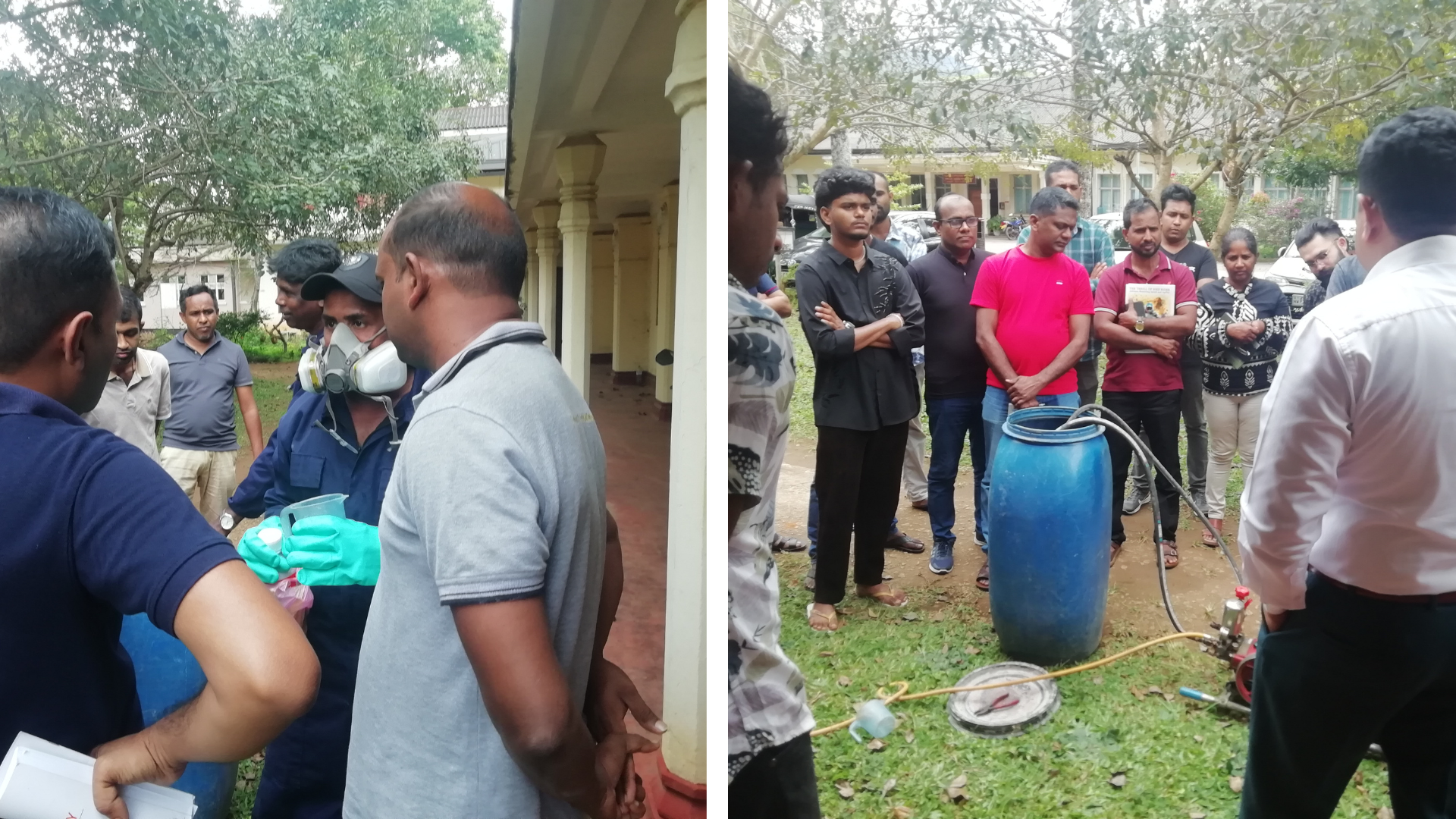
- Practical session in spraying technology
- Demonstration on the operation of Pesticide application equipment
Day 16: Techniques in pesticide application: Fumigation
- Introduction to fumigation
- Fumigations in Plant Quarantine
- Fumigation standards
- Fumigation techniques
Day 17: Techniques in pesticide application: Fumigation
- Fumigation: Demonstrations / Field visit (Ceylon Pest control, Jaela)
Day 18: Pesticides and pesticide hazards
- Risk assessment
- Environmental hazards associated with pesticide use
- Human health hazards associated with pesticide use
- Monitoring of human health in relation to pesticide exposure
Day 19: Safe handling of pesticides
- Safe handling of pesticides
- Personal protective clothing
- Handling of emergencies
- Regulatory requirements for handling of pesticides (Import/purchase etc.)
Day 20: Pesticide storage and handling of pesticide wastes
- Pesticide storage
- Local standards for pesticide storage facilities
- Handling of pesticide waste/contamination
- Disposal of chemical waste/containers
Day 21: Pesticide Regulations in Sri Lanka
- Need for pesticide regulation
- Historical landmarks of pesticide regulation
- International conventions in pesticide management
- Pesticide Act
Day 22: Handling of pesticides / good practices
- Procedures/guidelines for handling of pesticides
- Guidelines adopted by ROP for safe use of pesticides
Day 23: Guidelines for establishing pest control services
- Procedures for applying for a new license
- Needs/requirements in establishing a new pest control service
- Evaluation process
- Paperwork
Day 24: Guidelines / good practices for the operations of pest control services
- Customer care in pest control service
- Time management
- Document management
- Guidelines / good practices for pesticide handlers
- Database/database management/customer feedback
Day 24: First Aid, Emergency care associated with pesticide poisoning
- Pesticide poisoning/pesticide related accidents
- Handling of pesticide poisoning cases
- First aid/Emergency care
Day 25: Course review / Examinations/course evaluations
Student evaluations
All the components of the course evaluations are compulsory
(1) Mid-examination (written examination) - 30%
(2) End-examination (written examination) - 50%
(3) In-class quizzes, unannounced (15 quizzes) - 10%
(3) Summary report/Course compilation - 10%
- Pass mark: 50% of the final mark
- Participants should maintain 80% attendance and complete all assessments to be eligible for the certificate.
Resource Persons
BM: Prof. B Marambe, Department of Crop Science, Faculty of Agriculture, University of Peradeniya
IW: Ms IK Warshamana, Former Deputy Director of National Plant Quarantine Service, Uggalboda West, Gampaha.
JM: Dr Jeevanie Marasinghe, Principal Scientist (Toxicology), Office of the ROP, Gatambe, Peradeniya.
KM: Dr K Mohotti, Former Director of Tea Research Institute, No. 59, Udaeeriyagama, Peradeniya.
KSH: Prof. KS Hemachandra, Department of Agricultural Biology, Faculty of Agriculture, University of Peradeniya.
MDDS: Mr MDD Sigera, Pest Solutions (Pvt.) Ltd., 9 A 1/2, Karadiyana Road, Thumbowila, Piliyandala
PAIUH: Dr PAIU Hemachandra, Department of Agricultural Biology, Faculty of Agriculture, University of Peradeniya.
SJ: Dr S Jayakody, Additional Director General (Research), Dept. of Agriculture, Peradeniya.
TK: Dr Thilina Kavisekara, Medical Officer, ETU, Base Hospital, Rikillagaskada.
UGAIS: Dr UGAI Sirisena, Dept. of Plant Sciences, Faculty of Agriculture, University of Rajarata, Anuradhapura
WHJ: Dr WH Jayasinghe, Department of Agricultural Biology, Faculty of Agriculture, University of Peradeniya